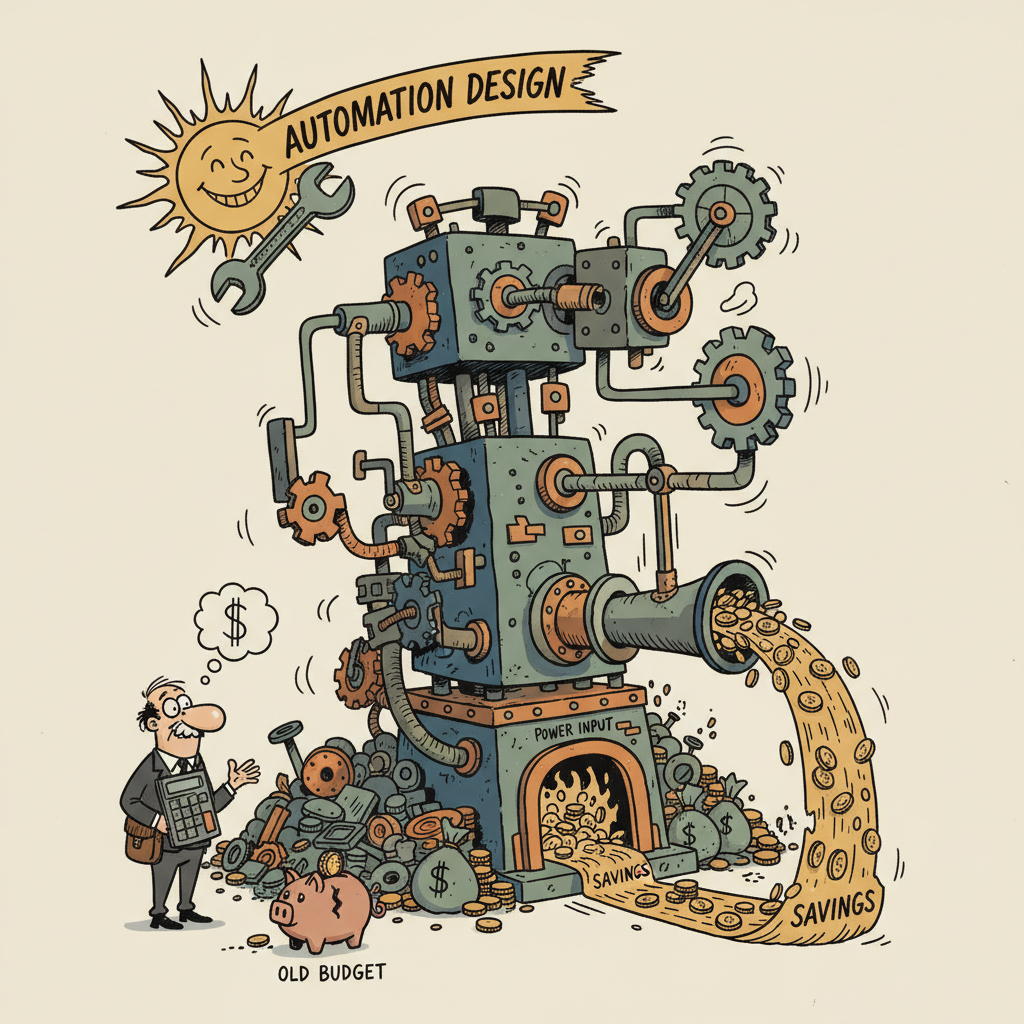
Designing Automation That Pays for Itself
Designing Automation That Pays for Itself
In today’s rapidly evolving business environment, the promise of automation can sometimes feel like an elusive dream. Business owners and marketing directors face the challenge of making smart investments while ensuring every dollar spent drives measurable returns. At the heart of this discussion is a compelling question: How do you ensure that automation is self-funding?
Understanding the ROI of Automation
Automation is often seen as a cost-center before it becomes a profit center. But the reality is different when you approach it with the right mindset. The return on investment (ROI) from automation lies not only in reducing labor costs but also in improving efficiency, accuracy, and scalability. When automation is designed to integrate seamlessly with business processes, it naturally begins to fund itself through increased revenue and cost savings.
For example, consider a marketing director who deploys smart workflows for lead generation. By automating data collection and segmentation, the director can consistently target prospects with personalized messages – a process that previously required substantial manual effort. The saved hours, when reinvested into strategy and creative optimization, gradually begin to translate into higher conversion rates and ultimately a positive ROI.
Actionable Framework for Self-Funding Automation
Designing automation that pays for itself requires a strategic framework. Here are several steps and frameworks to help you refine your approach:
1. Define Clear Objectives and KPIs
The first step is identifying what you want automation to achieve. Are you looking to cut costs, improve service speed, enhance accuracy, or all three? Set specific Key Performance Indicators (KPIs) such as reduced processing time, increased lead conversion rates, or improved customer satisfaction scores. With clear objectives, it becomes easier to measure impact and adjust the system accordingly.
2. Start Small with a Testable Pilot Project
Before committing to enterprise-wide changes, pilot a small, low-cost automation project. A controlled experiment helps in understanding the nuances of the automation process and predicts its impact before scaling up. For instance, automating email responses or scheduling can serve as a proving ground that demonstrates value and builds confidence in broader implementation.
3. Leverage Smart Workflows and Modular Design
Smart workflows are the backbone of low-cost automation. Employ a modular approach so that each automated segment interacts with other systems efficiently. This design not only reduces upfront costs by focusing on high-impact areas but also allows for incremental improvements that keep the ROI trajectory positive. With modular design, you can integrate additional functionalities as your needs evolve.
4. Invest in Data-Driven Optimization
Automation solutions thrive on data. Continuously evaluate the performance of your automated processes by collecting relevant data. Analyze this data to identify bottlenecks, inefficiencies, or unexpected outputs. Use insights from the data to refine the automation workflow. The continuous feedback loop helps the system evolve and adjust to dynamic market conditions, ensuring that the automation investment continues to pay off.
5. Embrace a Collaborative Approach
Success in automation is not solely about technology—it also involves people. Ensure that your team understands the benefits of automation and how it integrates with their day-to-day tasks. Involve key stakeholders from the outset. The agency MikeAutomated, for example, is known for blending technical expertise with a collaborative strategy, ensuring that the human element is never lost. This collective understanding fosters an environment where technology is seen as an ally rather than a threat.
Real-World Examples and Success Stories
A great way to understand the potential of self-funding automation is by looking at real-world applications. Consider a mid-sized e-commerce company that sought to revamp its customer support system. By implementing a chatbot for first-level queries and automating backend ticketing processes, the company managed to reduce its customer response time significantly. The efficiency boost not only satisfied customers but also freed up team members to focus on addressing more complex issues, leading to both cost savings and improved service quality.
Similarly, a B2B service provider used smart automation to manage its client onboarding process. By automating repetitive data entry and document management tasks, the provider saw a reduction in process time by nearly 50%. The cost savings from reduced manual intervention directly funded further automation initiatives across the organization.
Mental Models for Rethinking Automation
One powerful mental model to consider is the concept of “investment amplification.”strong> Rather than viewing automation as an expense, see it as an amplifier of your existing efforts. Each automated process reduces friction in operations, making every part of the business more efficient. Over time, these efficiencies build upon one another, creating a compound effect that not only covers the initial investment but also propels growth.
Another useful metaphor is that of a seed that grows into a tree. Just as a small seed, when nurtured, produces a tree that affords shelter, automation projects can start small and gradually expand to cover various parts of your business. This growth mindset encourages continual reinvestment in smart workflows and process design, turning automation into an ongoing driver of business success.
Designing Automation with a Long-Term Vision
To ensure that automation is self-funding, you need a long-term vision that goes beyond immediate cost savings. Focus on designing processes that improve overall business agility. This means integrating automation in a way that not only saves money but also enhances your competitive edge in the market. With evolving technology, automation is no longer a fixed investment but a dynamic process that must evolve with your business strategies.
Companies that adopt this long-term perspective, including those partnered with MikeAutomated, understand that the true power of automation lies in creating an ecosystem where every automated process feeds back into greater operational efficiency and profitability. By continually refining your workflows based on real-time data and maintaining a flexible, modular design, you ensure that each step in your automation strategy has the potential to finance the next.
Key Takeaways
To sum up, ensuring that automation pays for itself involves clear strategy, progressive implementation, and a relentless focus on measurable outcomes. Here are the essential points:
- Set Clear KPIs: Define what success looks like and measure every step.
- Test Before Scaling: Start with small projects to mitigate risk and build confidence.
- Smart and Modular Workflows: Build automation that can evolve with business needs.
- Data-Driven Evolution: Use data continuously to optimize processes and remove inefficiencies.
- Collaborative Integration: Keep team members engaged so that technology is embraced, not feared.
When automation is approached as an investment amplifier, it transforms from a cost center into a strategic asset. With the right balance of technology, data, and human insight, your automation systems can generate enough savings to continually fund their own growth and even push your business to new heights.
In a world of ever-changing market dynamics, designing automation that pays for itself is not just an operational need—it is a strategic differentiator. As you venture into automating your processes, remember that every smart workflow, every data-driven tweak, and every collaborative effort contributes to a self-sustaining engine of profitability. Embrace the change, invest in continuous improvement, and watch your business grow.