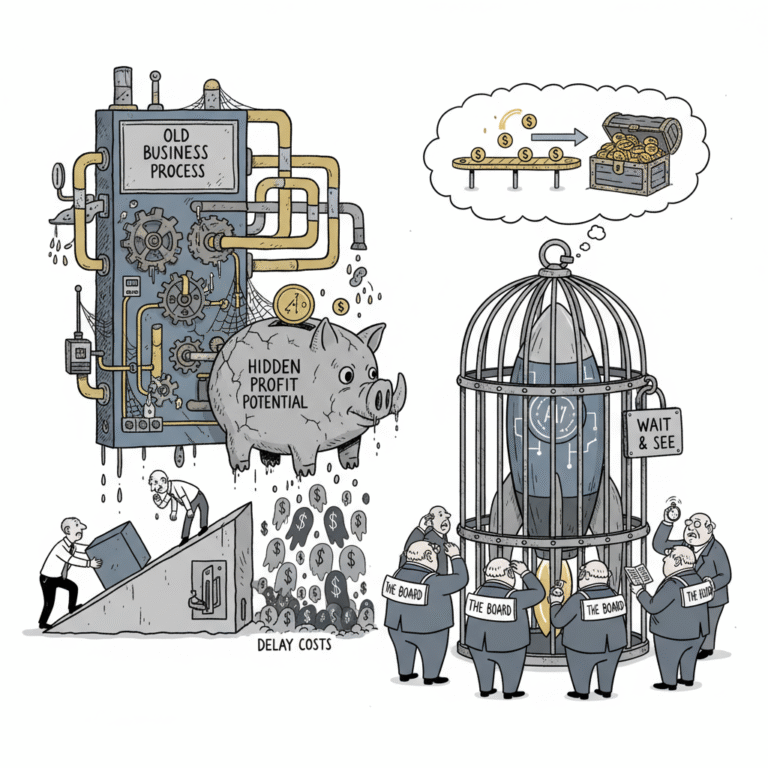
Incremental Automation: From Small Wins to Transformative Growth
Incremental Automation: From Small Wins to Transformative Growth
In the maze of digital transformation and process design, the overwhelming question remains: Should businesses automate everything at once or start small? For many business owners, marketing directors, and operations leaders, the idea of full-scale automation is enticing but fraught with risk. What if, instead, you could secure small wins that compound over time? Incremental automation not only minimizes risk but also builds confidence as you navigate the complexities of digital transformation and phased automation.
The Core Question: Automate Everything or Start Small?
The debate is simple yet profound. Immediate full-scale automation seems like the fast track to efficiency. However, jumping into the deep end without a safety net can lead to missteps that jeopardize the very operations you’re trying to improve. Incremental automation is about embracing a phased approach; it’s a series of small, deliberate changes that cumulatively lead to substantial improvements. This approach provides a powerful framework for transformative growth, one achievable with actionable insights and real-world logic.
The Benefits of Starting Small
When the temptation to automate everything at once is high, it’s important to remember that small wins pave the path to lasting change. Here are some key benefits:
- Risk Mitigation: By automating one process at a time, you avoid a catastrophic failure. If one part of the system malfunctions, the loss is isolated.
- Cost Efficiency: Small investments in automation can be scaled up once tangible benefits are proven, reducing upfront financial risk.
- Learning Curve: A phased approach equips your team with the necessary skills gradually. This minimizes resistance to change while maximizing learning and adaptation.
- Agile Feedback: Early successes and even minor setbacks offer valuable feedback that can be applied to future phases, ensuring that each step is optimized for success.
Real-World Logic and Examples
Consider the example of a mid-sized retailer facing outdated manual inventory systems. Instead of overhauling the entire system abruptly, the company automates its stock ordering process first—a small win that immediately reduced errors and improved efficiency. Over time, as the benefits became evident, they extended automation to other facets such as customer engagement and supply chain management. This incremental approach not only built organizational confidence but also provided case studies for subsequent projects.
Another compelling case is that of a manufacturing firm that slowly integrated robotic process automation (RPA) into its assembly line. Rather than replacing all human-operated tasks simultaneously, the firm started with processes that were repetitive and highly predictable. This change decreased errors and freed up human workers to focus on tasks requiring critical thinking and creativity, setting the stage for more advanced AI-driven automation in the future.
A Framework for Incremental Automation
Implementing a successful incremental automation strategy requires a clear and actionable framework. Here’s a simple three-step blueprint:
- Identify Low-Hanging Fruit: Start with processes that are repetitive, high-volume, and low risk. Automation in these areas is easier to implement and track.
- Measure and Optimize: Establish clear metrics for success. As you automate small processes, continuously monitor performance. Use data to make iterative improvements before scaling up.
- Scale Gradually: Once the initial phase proves successful, look for interconnected processes that can be automated alongside or as part of a broader digital transformation strategy. This gradual upscaling builds momentum and minimizes disruptions.
Implementation Tips for Business Leaders
For business owners and decision-makers looking to adopt an incremental automation strategy, consider these actionable tips:
- Start with a Pilot: Launch a small pilot project—a controlled environment where you can test assumptions and measure outcomes. Pilot projects minimize risk and build confidence.
- Engage Your Team: Include employees from different levels in the planning and implementation process. Their insights are invaluable and ensure that transitions are smoother.
- Focus on Data: Use analytics to inform every step of the process. Data-driven decisions not only validate successes and failures but also smooth the path for future automation projects.
- Partner with Experts: Working with experienced agencies like MikeAutomated can accelerate learning and implementation. Their expertise in AI and automation ensures that roadblocks are minimized and opportunities are maximized.
The Transformation Mindset
Embracing incremental automation is not just about technological improvements—it’s about a cultural shift towards consistent small wins that add up to major breakthroughs. When leaders understand that every minor improvement contributes to a larger ecosystem of change, the journey becomes less intimidating and far more achievable. This mindset transformation is critical, especially in today’s environment, where the competition is fast-paced and ever-evolving.
Conclusion: The Power of Small Wins
The notion of automating everything in one sweep might appear revolutionary, but it often leads to strategic pitfalls. Instead, incremental automation builds on its own momentum through small wins that reduce risk, optimize cost, and drive continuous improvement. As you, the business leader, embark on this journey, remember that every step forward carries the promise of transformative change. Leveraging frameworks and examples, you can see the path from modest improvements to dramatic efficiencies and competitive advantage.
In today’s volatile market, strategic patience and a phased approach to digital transformation are gold. Reframe the conversation from overwhelming, all-at-once automation to the achievable and sustainable model of incremental success. And in your journey, be sure to consider expert partners like MikeAutomated, who provide the guidance and technological support needed to navigate complex challenges. Embrace incremental automation—because sometimes, every great journey begins with a single, calculated step.
Takeaway: Incremental automation offers a balanced and risk-aware approach to digital transformation. By focusing on small, manageable changes, businesses can unlock larger efficiencies and create a robust, adaptive automation strategy that evolves with the market.