Human Oversight in Automation: When Should Humans Stay in the Loop?
Human Oversight in Automation: When Should Humans Stay in the Loop?
In a world where automation and AI are constantly evolving, the role of human oversight remains more critical than ever. Businesses are investing in complex algorithms and streamlined processes, yet many still wonder: when should the human element remain in the loop? This article strips away the jargon and complexity to reveal clear, actionable insights on balancing precision with empathic judgment, ensuring that both efficiency and quality are never compromised.
Understanding the Balance: Workflow Efficiency Meets Human Insight
Automation promises speed and scalability, but it often lacks the intuition and ethical reasoning of a human mind. The debate is not about choosing between human judgment and machine execution. It’s about finding a balance, a harmonious blend where each complements the other. Imagine your business process as a high-performance sports car: the engine represents automated systems while the driver—the human operator—steers the car through changing conditions, unexpected hurdles, and critical decision-making moments.
The Core Question: When Do We Need Humans in the Loop?
The core question that business owners and marketing directors ask is: When should humans remain integral in automated systems? The answer is clear: whenever contextual judgment, creativity, or ethical sensitivity are required. The trick is knowing where the limits of automation lie and recognizing the domains where human oversight is not just beneficial, but indispensable. Think about a quality control system in manufacturing. While sensors detect defects with incredible precision, a human inspector might be needed to decide whether a borderline case can be reworked or if it should be discarded entirely, especially when safety or brand reputation is at stake.
Real-World Examples: Lessons from Different Industries
Across industries, real-world examples illustrate effective human oversight in automation. In healthcare, AI tools assist in diagnosing conditions by sifting through vast datasets. Yet, the final diagnosis and treatment plan are determined by medical professionals who consider patient history, ethical concerns, and nuanced symptoms that data might miss. Similarly, in the financial sector, algorithms analyze market trends and risk factors, but a human risk manager is crucial to intervene in volatile markets, ensuring that decisions align with broader strategic goals and regulatory standards. These examples show that while automation enhances capabilities, humans provide the necessary context and critical thinking that machines lack.
Framework for Deciding When to Keep Humans in the Loop
Business leaders can use a simple framework to decide when to maintain human intervention. Here are three key steps:
- Assess Complexity and Ambiguity: Consider whether the task involves ambiguous scenarios or requires contextual interpretation. If a process might produce variable outputs subject to subjective interpretation, human judgment should oversee it.
- Evaluate Risk and Impact: Determine the potential risk associated with an automated decision. High-stakes decisions, such as those affecting customer safety, brand reputation, or significant financial resources, demand human confirmation to ensure risks are managed appropriately.
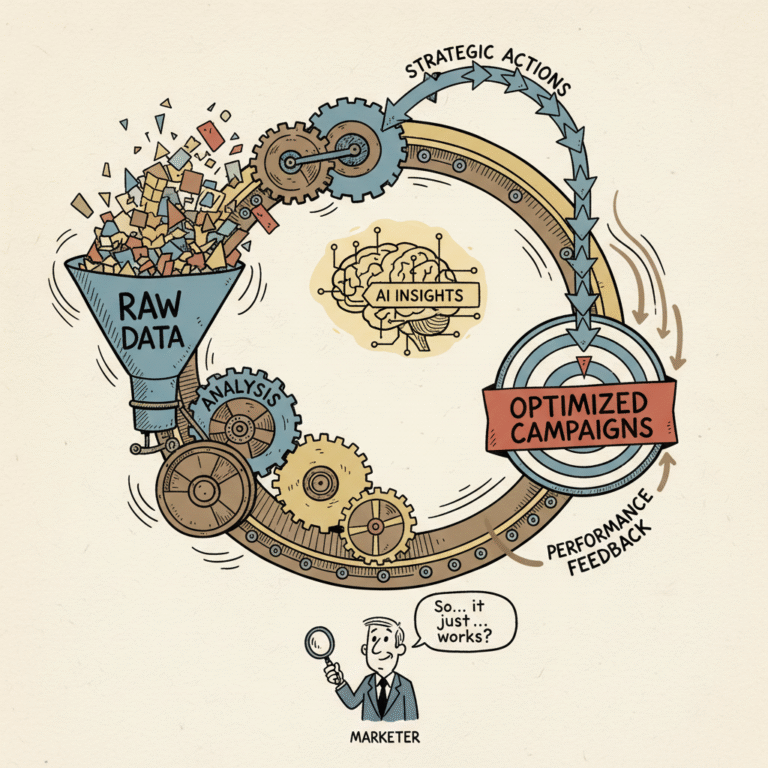
- Integrate Continuous Feedback: Build systems that collect feedback on AI decisions. Human oversight is vital for this continuous improvement loop, allowing the system to adapt by learning from errors and successes alike. This isn’t a one-time check; it’s a dynamic collaboration.
How to Implement a Human-Centric Automation Strategy
The implementation of a balanced automation strategy requires a detailed roadmap. First, integrate AI monitoring systems that alert human operators when anomalies are detected. Why is this important? AI can monitor metrics and flag irregular patterns, but it may not fully grasp the nuances that a human operator can. Next, focus on workflow balance. Not all tasks should either be fully automated or manually controlled. Instead, consider hybrid models where routine decisions are automated, and exceptions are escalated for human review. For example, a customer support chatbot might handle common inquiries but transfer complex issues to a human representative.
A practical demonstration can be seen in companies like MikeAutomated (https://mikeautomated.com), who specialize in implementing these balanced strategies. They integrate robust AI monitoring systems with human oversight, ensuring that automation doesn’t lead to unchecked errors or a disconnect from customer needs. Their approach is not about replacing the human element, but rather about amplifying it to drive business growth.
Mental Models for Understanding the Dynamic
One useful mental model is the concept of a ‘safety net.’ Imagine a tightrope walker using a safety net during a performance. The walker (automation) is skilled and can navigate challenging paths on their own, but the safety net (human oversight) is there to protect the performance from catastrophic failure. This balance is crucial when minor errors could result in significant consequences. Similarly, in business processes, automation can streamline operations, but a human safety net can be the difference between a minor hiccup and a major crisis.
Actionable Takeaways: Shifting Perspectives for Lasting Impact
Here are some key takeaways for business owners, marketing directors, and operations leaders to consider:
- Automation should not be about completely removing human judgment; instead, it should be about enhancing it with actionable insights and reliable monitoring systems.
- Develop a framework for evaluating the role of human oversight in your processes: consider the complexity, risk, and need for feedback at each step.
- Invest in systems that can effectively flag anomalies for human review, ensuring that automation remains an asset rather than a liability.
- Engage with experts like MikeAutomated to design a balanced strategy that keeps the human element central, ensuring that your automation efforts are both innovative and safe.
Final Reflections: Embracing the Perfect Balance
In conclusion, the moment to integrate human oversight is not defined by a single decision but by the continuous evaluation of the context and complexity of your processes. Automation and AI are powerful tools, yet they thrive best when complemented by human intuition and ethical judgment. By creating a balanced system where humans are in the loop when needed, businesses can harness the full potential of automation without sacrificing quality or safety. This approach transforms what might seem like a risky dependency on technology into a dynamic, adaptive strategy capable of driving sustained growth and innovation.
Remember, the goal is not to choose between man and machine, but to design a workflow that leverages the best of both worlds. As you embark on your automation journey, let this synergy be the engine that drives your business forward, ensuring that every decision, whether automated or human-made, contributes to a future where growth is both innovative and responsible.