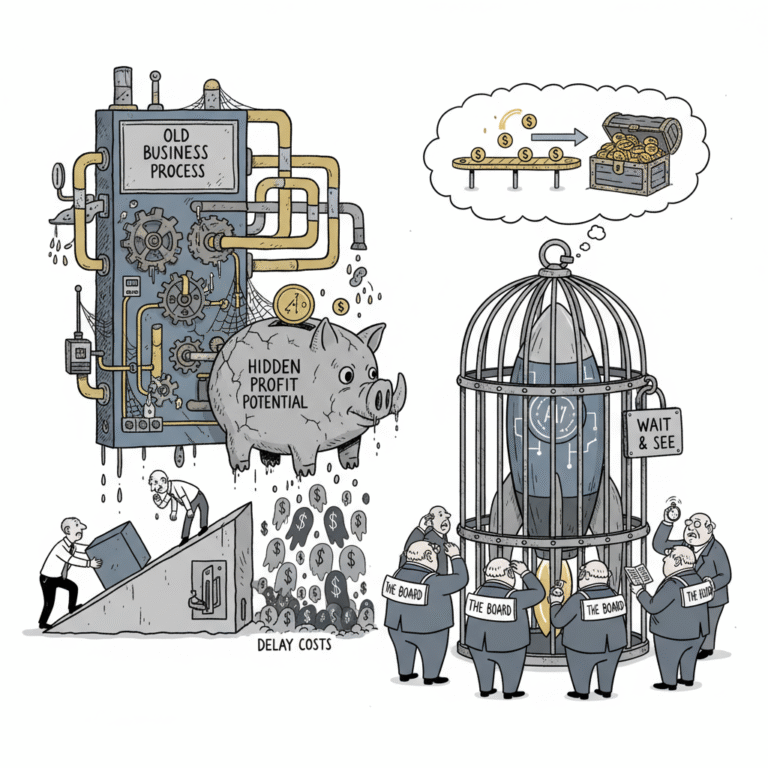
Building a Minimum Viable AI Project: Test Smart, Scale Fast
Building a Minimum Viable AI Project: Test Smart, Scale Fast
For many business owners and marketing directors, diving into AI can seem like stepping into uncharted territory, with the risk of wasting budget on complex projects that never materialize. The core question driving this journey is: How can you test AI without wasting budget? This article introduces a new perspective on building a minimum viable AI project—commonly referred to as MVP AI, AI prototype, or lean AI. We’ll break down a pragmatic, real-world approach that saves money, minimizes risk, and sets the stage for scalable growth.
Understanding the Minimum Viable AI (MVP AI) Approach
The concept of a Minimum Viable Product (MVP) is familiar to tech startups. With AI, the idea is similar: start small with an AI prototype that addresses one key problem. This lean approach is not about building a half-baked solution but rather about validating assumptions quickly, learning from the process, and iterating on the solution with minimal investments.
By focusing on a core element of your strategy, you can reduce the initial complexity and cost. Many innovative companies have been able to test AI’s potential without committing to a full-scale implementation until they have proven success. This agile mindset not only mitigates risk but also helps in conveying value to stakeholders promptly.
Why Testing AI on a Small Scale Makes Sense
Imagine planning a road trip. Instead of buying a new car immediately, you might try renting one to ensure the journey is feasible. Similarly, a pilot project in AI is your opportunity to “test drive” the technology. In this phase, you examine key functionalities, learn how data flows through your systems, and understand the real-life input-output mapping of the AI solution. The benefits include:
- Cost Efficiency: You avoid an expensive, full-scale project that might not deliver the expected return on investment.
- Faster Learning: By focusing solely on a core problem, you can iterate quickly, gathering important data and user insights.
- Adaptability: Real-world feedback allows you to pivot your approach when needed, which is often much harder once you’re fully committed.
Steps to Build Your MVP AI Project
There’s no one-size-fits-all plan, but the following framework is a great starting point:
1. Define the Business Problem
Before starting your AI project, clearly articulate the business challenge you’re aiming to solve. Whether it’s optimizing customer segmentation, predicting sales trends, or automating routine tasks, a precise problem definition keeps your efforts focused and your budget lean.
2. Identify the Key Data Sources
Your AI model is only as good as the data that feeds it. Identify the most accessible and high-quality data source that’s directly relevant to your problem. Avoid the temptation to compile extensive datasets early on—you can always scale up once your MVP AI demonstrates success.
3. Assemble a Cross-Functional Team
Building AI doesn’t happen in isolation. Collaborate with stakeholders from IT, marketing, operations, and data science. A diverse team brings valuable perspectives that can help uncover hidden opportunities and mitigate potential risks early in the process.
4. Develop the Prototype
Focus on creating a working AI prototype that tests the viability of your concept. This doesn’t require beautiful interfaces or complete automation; a minimally viable model that performs its core function is sufficient. Leveraging platforms like those provided by MikeAutomated can streamline this process, offering practical expertise and rapid iteration cycles.
5. Test, Analyze, and Iterate
After deploying the prototype, it’s time to gather feedback. Use metrics that are aligned with your business objectives to assess the AI’s performance. Is it accurately predicting outcomes or categorizing data as intended? Analyze the results, tweak the algorithms, refine your data inputs, and don’t be afraid to pivot if initial assumptions turn out to be off target.
Real-World Success: A Case for Lean AI
Consider a mid-sized retail company that was challenged by fluctuating customer purchase patterns. Rather than investing in a comprehensive, cost-intensive AI overhaul, the company initiated a lean AI prototype focusing on customer segmentation. They leveraged existing transaction and website data to identify purchasing trends and tailor their marketing strategies accordingly. The results were striking: a modest investment led to a significant increase in conversions and customer retention. This quick win bolstered confidence in the AI approach, leading them to gradually scale up operations.
This example underscores a key takeaway: lean AI doesn’t mean less capable AI; it means a smarter, more iterative approach that builds on real data and real-world feedback. It’s a process of discovery that transforms skepticism into informed optimism, demonstrating that even small experiments can lead to transformative insights.
Framework for the Lean AI Mindset
Launching an MVP AI project involves more than just technical deployment—it requires a change in mindset. Here’s a mental model to guide your journey:
- Prioritize Learning Over Perfection: The focus should be on what you learn rather than trying to build a perfect system on the first go. Early failures are less costly and more informative.
- Embrace Iterative Development: Think of your AI model as a living project. Each iteration is a chance to refine your approach based on concrete feedback.
- Make Data-Driven Decisions: Challenge assumptions with numbers. Let the performance metrics guide your development rather than assumptions based on intuition alone.
- Stay Agile: When market conditions change or new insights emerge, remain flexible. Your MVP AI is designed to be modified, not set in stone.
The Role of Strategic Partnerships
The journey doesn’t have to be a solo expedition. Working with experienced teams such as MikeAutomated can bring significant advantages. Their expertise in marketing, automation, and AI ensures that you’re implementing technology in a way that’s aligned with your strategic goals. Strategic partnerships can accelerate the learning process, provide access to best practices, and even help with securing a more streamlined project rollout that minimizes wasted resources.
Final Thoughts: Transforming AI from a Risk into an Opportunity
Testing AI through a minimum viable project isn’t just a budget-saving tactic—it’s a strategic approach to uncover hidden opportunities. With a lean AI mindset, you begin to see each small experiment as a stepping stone towards broader transformation. This approach encourages a culture of continuous learning and agility. Business leaders are empowered by the knowledge that even on a limited budget, significant insights and competitive advantages are within reach.
Ultimately, the goal is to lift the fog surrounding AI’s complexity and reveal a clear, actionable pathway to business growth. By starting small, gathering real-world data, and iterating rapidly, you transform the daunting prospect of an AI project into a series of manageable, enlightening steps. Embrace the lean AI model, and you’re well on your way to turning initial skepticism into lasting strategic value.
Takeaway: The essence of MVP AI is not about scaling fast but about learning fast. Each carefully measured test provides a blueprint for future success without the risk of ballooning costs. Let your journey in AI be guided by insight, iteration, and innovation—and watch as hidden opportunities transform into tangible business growth.