Campaign Feedback Loops: Transforming Your Marketing Through Continuous Improvement
Campaign Feedback Loops: Transforming Your Marketing Through Continuous Improvement
In today’s fast-paced digital environment, running a marketing campaign is not a one-and-done task. It requires continuous monitoring, learning, and adjusting – a dynamic process best achieved through effective feedback loops. If you’ve ever asked yourself, ‘How do I make my campaigns smarter with feedback loops?’ then you’re ready to unlock a hidden opportunity that transforms vague metrics into actionable insights.
Understanding Campaign Feedback Loops
A feedback loop in marketing is like a GPS for your campaign strategy. Imagine setting out on a road trip without any navigation system. You might get lost or waste time on a wrong path. Similarly, without constant analysis and adjustment, even the best campaigns can go off track. At its core, a feedback loop uses real-time data from your marketing analytics and campaign tracking systems to inform decisions and fine-tune your strategy.
The Core Question: How Do I Make Campaigns Smarter?
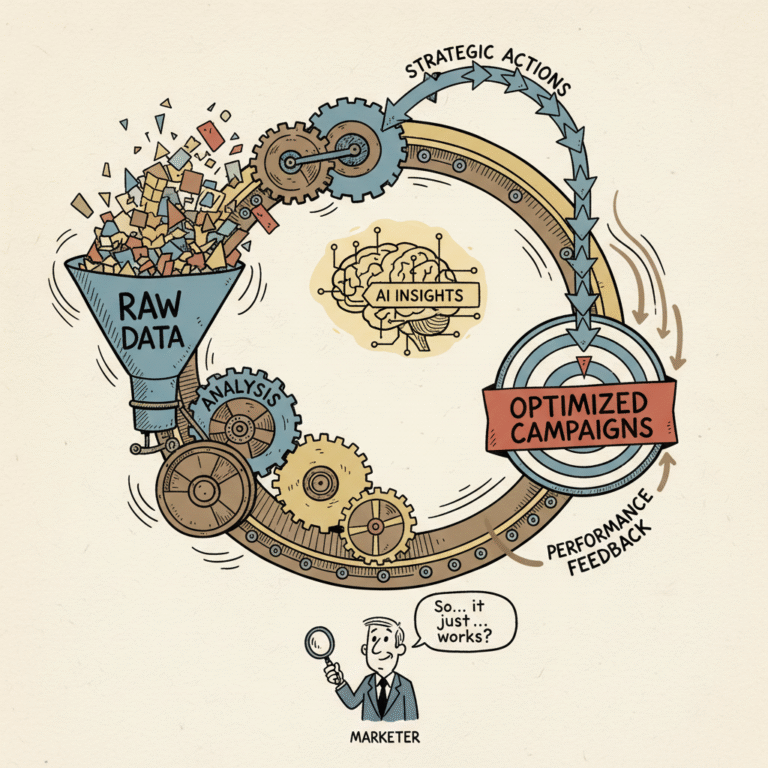
The central inquiry many business leaders face is how to convert raw data into smart, sustainable actions that optimize marketing spend and boost performance. The answer lies in creating structured, iterative feedback loops that reshape your campaigns in real-time. This method not only makes your campaigns more responsive to market trends but also positions your business competitively.
Building the Feedback Loop Framework
Let’s break down the essential elements of a successful feedback loop framework:
- Data Collection: The first step is gathering accurate data. This involves leveraging advanced marketing analytics tools to track engagement, conversion rates, and customer behavior. Tools and platforms should be calibrated to capture key performance indicators (KPIs) that are aligned with your business goals.
- Data Analysis: Once data is collected, the next step is analysis. This phase involves understanding the ‘why’ behind the numbers. Identify trends, anomalies, and patterns that can provide clues for improvement. A simple analogy is how a chef tastes a dish at different stages to ensure the perfect blend of flavors.
- Actionable Insights: Insight is only as good as the actions it provokes. The real power of feedback loops lies in converting data insights into tactical decisions. Decide what adjustments are needed in your campaign – or even a complete pivot – to optimize results.
- Implementation: Implement the changes rapidly. This phase requires agile project management and a willingness to experiment. Automation tools, like those offered by MikeAutomated, can significantly reduce the time needed to execute these changes.
- Review and Iterate: Finally, measure the impact of changes and compare the outcomes against your original benchmarks. This cyclical process ensures continuous improvement.
Real-World Example: A Retail Business Case
Consider a retail business launching a seasonal campaign. Initially, they might target a broad audience with a generalized message. However, once the campaign launches, data reveals that a specific segment displays higher engagement and conversion rates.
By applying feedback loops, the marketing team narrows its focus, retargets the high-performing segment with personalized content, and adjusts the budget allocation accordingly. This change not only boosts sales but also improves the return on investment (ROI). Here, real-time analytics led to rapid optimization and better performance – a clear demonstration of effective feedback loops in action.
Leveraging Technology for Smarter Feedback
With the evolution of technology, AI and automation now play a crucial role in enriching your feedback loops. Machine learning algorithms can sift through mountains of data to detect subtle trends that human eyes might miss. For example, an AI tool can analyze customer interactions across various channels and predict which messaging resonates best with your audience, allowing adjustments to be made almost instantly.
This is where agencies like MikeAutomated come into play. They integrate AI-driven insights with robust marketing analytics, ensuring that your data is not just collected but also interpreted and acted upon in a timely fashion. Such technology makes the feedback loop faster, more accurate, and significantly more efficient.
Actionable Insights and Best Practices
To build a robust campaign feedback loop, consider these actionable insights:
- Set Clear KPIs: Define what success looks like before the campaign begins. Whether it’s increased website traffic, higher engagement rates, or improved sales conversion, clear goals anchor your analysis.
- Implement Early Alert Systems: Use automated tools that trigger alerts when a campaign deviates from expected performance metrics. This helps in taking swift corrective actions.
- Embrace Iteration: Accept that every campaign is a learning opportunity. Maintain an agile mindset that welcomes change and continuous improvement.
- Focus on Customer Behavior: Direct feedback loops to not just track ad performance, but to understand customer behavior changes over time. This is key to re-targeting and personalized marketing.
- Combine Human Insight with AI: Use advanced algorithms for data-heavy lifting, but always pair the findings with human insight. A nuanced understanding of market conditions or customer sentiment can add depth that pure numbers might miss.
Overcoming Common Challenges
Despite the clear benefits, implementing effective feedback loops comes with challenges. One common issue is over-reliance on data without understanding the context. Metrics can be deceiving if not complemented by qualitative insights. Another challenge is data overload – excessive or irrelevant data can mask actionable insights, leading to analysis paralysis.
To overcome these hurdles, maintain a balance between automated technology and strategic human analysis. Focus on quality over quantity in data collection, and ensure that your team is trained to interpret data contextually. This balance allows you to harness the benefits of both worlds.
The Ultimate ‘Ah-Ha!’ Moment
The true breakthrough comes when you see the feedback loop not as a rigid process but as a living system that evolves with market trends and consumer behavior. Every campaign becomes a rich source of learning, refined continuously until it’s operating at peak performance. Instead of being overwhelmed by analytics, marketers start viewing them as strategic allies in the quest for improved performance.
Through strategic adjustments and a commitment to iteration, your marketing campaigns can shift from static endeavors to dynamic, self-optimizing systems. The secret? A combination of AI, automation, and actionable marketing analytics that transforms raw data into powerful, actionable insights.
Final Thoughts: Embrace the Iterative Journey
The journey to smarter campaigns is not a sprint; it’s a marathon that rewards agility and continuous learning. Feedback loops empower you to make informed decisions swiftly, optimize your marketing spend, and drive business growth. With the right blend of technology and strategy, every campaign becomes a stepping stone to greater success.
As you explore these insights, remember that the hidden opportunity lies in constant iteration. Agencies like MikeAutomated are at the forefront of this transformation, enabling businesses to harness the power of AI and automation. Your competitive edge is just one feedback loop away – from confusion to clarity, from scattered data to strategic insight.
Embrace the iterative journey, and transform your campaigns into smart, self-optimizing engines of growth.