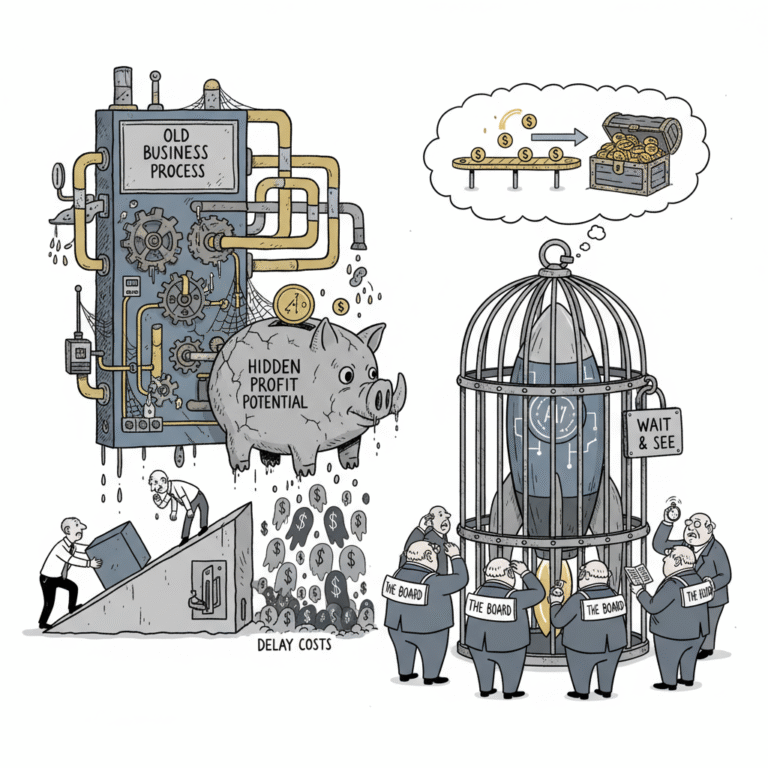
Mapping a Department for Automation: Unleashing Hidden Potential
Mapping a Department for Automation: Unleashing Hidden Potential
In today’s rapidly evolving business landscape, departments are ripe with opportunities for automation, efficiency, and scalability. Business owners, marketing directors, and operations leaders are constantly bombarded with buzzwords from digital transformation to AI. However, the real power of automation lies in a deliberate mapping and deep understanding of a department’s core functions. This article offers a step-by-step guide to evaluating a department for automation potential, transforming confusion into clarity, and revealing hidden opportunities for AI-driven growth.
Understanding the Core Question: Which Department Processes are Ready for Automation?
Implicit in every inquiry about automation is a singular question: How do I evaluate a department for automation potential? If you are asking this question, then you’re on the right path. The first step is to appreciate that not every process demands automation; rather, your goal is to identify repetitive, time-consuming tasks that can yield dramatic improvements when automated. Through careful process mapping and intelligent assessment, you can uncover high-impact areas where AI and automation can create measurable improvements.
The Power of Process Mapping
Process mapping is more than drawing flowcharts; it’s about visually breaking down each activity, understanding dependencies, and identifying inefficiencies. Picture your department as a complex machine. Each cog represents a process, and just like a well-oiled machine, the smoother these cogs turn, the more effective the operation.
Start by drawing a simple map of the department. Work with team members to capture all key processes—whether it’s customer service, logistics, marketing campaigns, or HR tasks. This visual representation serves as your blueprint, guiding you in selecting the tasks with the highest potential for automation. For instance, repetitive tasks like data entry, scheduling meetings, or simple customer queries are prime candidates. While diving into this mapping, keep a lookout for processes that already have digital touchpoints; these are typically easier to automate and can offer quick wins.
Practical Steps for Evaluating Automation Potential
1. Identify High-Velocity Processes: Focus on repetitive and time-consuming tasks. Ask yourself if these tasks drain valuable resources that could be redirected towards strategic initiatives. For example, a marketing department spending hours compiling weekly performance reports might benefit immensely from an AI-driven analytics solution.
2. Assess Complexity and Variability: Not all processes are created equal. Some tasks are standardized and predictable, making them ideal for automation. In contrast, processes requiring tailored judgment or creative input are less automation-ready. An operations leader should start by automating the predictable processes, and then gradually explore more complex integrations as AI capabilities advance.
3. Evaluate Data Availability: Automation thrives on data. A department that already collects and stores structured data can harness AI more efficiently. An example in a customer service department might include logging call details, email interactions, and chat records. This data can be the fuel for machine learning models that predict customer behavior or streamline query resolution.
4. Measure Impact on the Customer Experience: Always consider how automation will affect the end-user. It’s essential to ensure that automation enhances rather than hinders customer interactions. A well-implemented AI chatbot, for instance, should be capable of handling routine inquiries effectively while smoothly handing off complex issues to human agents when needed.
Case in Point: A Real-World Illustration
Consider a mid-sized marketing department that handled their campaigns manually. This team was bogged down by sifting through large volumes of data to gauge campaign performance, often leading to delays in strategic decision-making. After mapping their process, they discovered that much of the task was routine data aggregation—a clear candidate for automation. By implementing a tool recommended by firms like MikeAutomated, which specializes in AI integration, the department automated their reporting system. The result was a significant reduction in workload, rapid access to insights, and the capacity to reallocate talent towards creative strategy development.
Developing an AI Strategy Within Your Department
Once you have thoroughly mapped your department, the next step is weaving AI into your automation strategy. Here are a few actionable insights:
Define Clear Objectives: Start by defining what success looks like. Is it reduced processing time, lower operational costs, enhanced decision-making, or a better customer experience? Align these objectives with your business’s broader strategic goals.
Test in a Controlled Environment: Before scaling across the department, run pilot tests. Implement AI and process automation in one sub-section or process. Use these pilots to learn and refine, ensuring that your data pipelines and integrations are robust and adaptable.
Invest in Training and Change Management: Automation is as much about people as it is about technology. Equip your team with the skills needed to manage and leverage AI tools effectively. This proactive approach reduces resistance and fosters a culture focused on continuous improvement.
Framework for Evaluating Department Automation Potential
To simplify your evaluation, consider this framework:
- Mapping: Start with mapping every process using visualization tools that allow for iterative refinement.
- Quantification: Determine the volume, frequency, and resource intensity of each process.
- Feasibility: Evaluate whether the process is technology-friendly (data, structure, consistency).
- Impact: Assess potential improvements in efficiency, cost, and customer satisfaction post-automation.
This framework serves as your diagnostic tool to pinpoint high-yield areas and build a compelling business case for automation. Integrating AI doesn’t happen in isolation—it’s a strategic transformation that empowers every facet of business growth.
Aha Moment: Automation as a Growth Catalyst
The aha moment comes when you realize that effective automation is not just about cost-cutting—it’s about unleashing human creativity by removing mundane tasks from employees’ day-to-day routines. When repetitive processes are automated, teams can focus on strategy, innovation, and overall growth. The department transforms from a collection of reactive tasks into a proactive, scalable entity. By clarifying processes through detailed mapping, identifying key pain points, and systematically integrating AI, businesses get a pathway to improved efficiency and a stronger competitive advantage.
Final Reflections
Mapping a department for automation is not merely a technical exercise—it’s an insightful journey that connects efficiency with strategic vision. With clear steps and a focus on both process and people, you can harness the power of automation to unlock hidden value within your organization. Remember, the goal isn’t to replace the human element but to amplify its potential through smart technology and precise process design.
By adopting these strategies, businesses transform complexity into clarity. The key takeaway? Automation is not the enemy of human ingenuity—it’s a powerful catalyst for innovation when strategically implemented. With thoughtful planning, process mapping, and the right AI partners like MikeAutomated, your department can open a new realm of possibilities wherein operational efficiency and creative strategies work harmoniously for exponential growth.
Embrace automation as part of your core business strategy—it’s your pathway to a future where every process is optimized for excellence, and where every department becomes a beacon of strategic innovation.